
Software and AI Tools Transforming Recruitment Agencies in 2026
 JA
JA
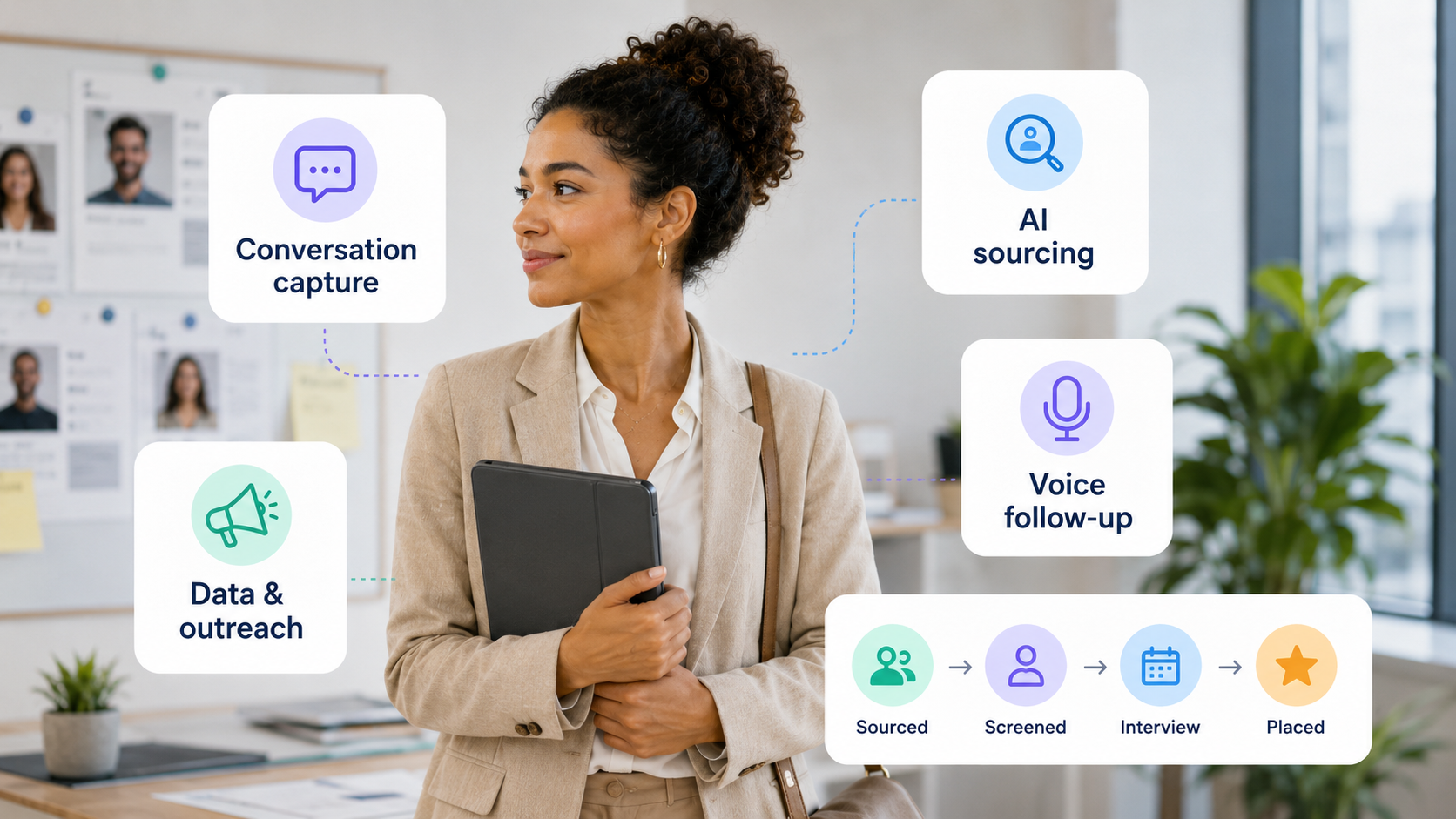
A theme runs through every contribution below: in recruitment, the edge comes from capturing conversations, responding faster, and keeping client and candidate relationships in one clean system.
That matches what we see in the data. At Cllimber we track software adoption across 63 industries through the Cllimber Opportunity Index, and recruitment agencies sit in the Professional/B2B archetype, where structured CRM, pipeline, and sales tooling compound in value the longer they are held. That is why the four practitioner-tested tools and strategies below repay the time to set them up. They come from agency founders and operators running them in live businesses.
Recruitment agencies are rapidly adopting software and AI tools to streamline their operations and gain competitive advantages. Industry experts point to specific technologies that are reshaping how agencies source candidates, manage relationships, and close placements faster than ever before. From automated voice systems to intelligent data consolidation, these innovations are proving essential for agencies looking to scale their business in a competitive market.
The biggest AI wins for recruitment agencies in 2026 fall into four areas: capturing every client and candidate conversation (meeting transcription), consolidating sourcing and outreach into one system (Apollo.io), embedding AI sourcing and screening into existing workflows, and CRM-connected voice automation that compresses speed-to-contact. The recurring lesson: automate the repetitive admin so recruiters spend their time on the human, relationship-driven parts of the job.
- CRM-connected voice AI can take a missed call to a booked appointment in under 30 seconds — warm conversations stop being lost to voicemail lag.
- Transcribing every conversation builds institutional memory — agencies can see what a client said months ago, spot shifting hiring priorities, and surface recurring candidate objections.
- For recruitment agencies, sales automation creates the largest competitive advantage of any software category, scoring 52.5 out of 100 in the Cllimber Opportunity Index 2026, with CRM at 49.0.
- Automation only works on clean data — up to half of SMB CRM data can become unusable within six months when intake fields aren't enforced, so field discipline is a prerequisite, not an afterthought.
Capture Every Conversation
At Redfish Technology, the tool that has probably had the biggest impact on our business isn't an ATS, a sourcing platform, or even an AI product. It's a meeting recorder and transcription tool. That answer usually surprises people.
The reason is simple: recruiting firms generate an enormous amount of valuable information, but most of it disappears. A client says something insightful during an intake call. A candidate explains why they left a competitor. A hiring manager reveals a concern that never makes it into the job description. Traditionally, much of that knowledge lives in someone's notebook or memory.
A few years ago, I realized we were having the same conversations over and over because we weren't capturing them well enough. Now, virtually every internal and client-facing conversation is transcribed, searchable, and connected to our workflow.
The impact hasn't been speed so much as institutional memory. A recruiter can look back six months and see exactly what a client said they were struggling with. We can spot changes in hiring priorities, identify recurring objections from candidates, and even see which predictions we got right and which we missed. As a founder, that's been incredibly valuable because it allows the business to learn from itself.
 RR
RR
Consolidate Data and Outreach
Apollo.io fundamentally changed our agency by bridging the gap between raw data sourcing and automated engagement. Before integrating this at developers.dev, we bled time moving data between disconnected prospecting databases and outreach tools. That friction was a direct tax on our time-to-hire metrics. By consolidating these functions, we stripped away the manual administrative layers that often stifle agency growth.
The benefit isn't just access to a larger candidate pool; it's the ability to execute personalized, multi-step sequences at scale. When we identify a lead matching our specific tech stack requirements, the tool manages the follow-ups. This demands a higher caliber of writing because automation only scales the quality of your strategy. If the content is weak, the software simply accelerates your failure.
Many agencies fall into the "spray and pray" trap, which quickly destroys their domain reputation and engagement rates. We bypass this by hyper-segmenting our outreach — targeting niche skill sets like blockchain or React Native — to ensure our messages provide genuine value to the candidate. This lets us scale our sourcing capacity without scaling recruitment headcount proportionally. It shifts the recruiter's role from data entry clerk to high-value relationship manager. Ultimately, the goal is simple: automate the repetitive administrative work so your team can focus on the nuanced, human-centric parts of recruitment that software will never replace.
 AA
AA
Integrate AI for Speed
The most effective single tool we used was AI-driven candidate sourcing and screening embedded into our recruiting process. The real value was not in replacing recruiters, but in getting rid of tedious manual processes that were slowing down our delivery and limiting the capacity of our recruiters.
The reason for the difference was clear: recruiters were able to spend more time engaging candidates and clients, rather than screening resumes. Speed-to-shortlist improved, administrative burden decreased, and scaling up recruitment in various international markets became much easier without having to expand our recruiting staff in lockstep.
One key takeaway is that the most effective recruiting AI technologies are those that seamlessly integrate into existing recruiting workflows, rather than introducing a new siloed technology stack. In 2026, recruiting agencies will benefit the most from technologies that integrate sourcing, screening, outreach automation, and analytics into a single process.
 GF
GF
Activate CRM Voice Automation
The biggest shift I'm seeing isn't one magic sourcing app — it's a voice AI layer tied directly into the agency CRM. In recruiting, speed-to-contact still decides who gets the candidate and who loses them. If a lead, referral, or inbound applicant waits even ten minutes, the odds of a live conversation drop fast.
The highest-impact setup I've worked on is a voice agent connected to CRM workflows and routing logic. When someone misses a call, fills a form, or replies after hours, the agent calls back immediately, qualifies intent, answers basic questions, and books the right recruiter or routes the lead to the correct desk. In one workflow using a CRM, voice agent, and webhook together, we got routing from missed call to booked appointment under 30 seconds. That kind of response time changes outcomes, because recruiters stop losing warm conversations to voicemail lag and manual follow-up.
The other reason this matters for agencies is data quality. Automation only works if the CRM is clean. I've seen half of SMB CRM data turn unusable by month six when intake fields aren't enforced. For recruiting teams, that means duplicate candidates, bad ownership, and broken follow-up. The voice layer works best when every conversation updates the CRM in real time and follows strict field rules.
My takeaway, if I had to pick one tool category, is CRM-connected voice AI automation. Not because it sounds impressive, but because it compresses response time, captures more conversations, and keeps recruiters working live opportunities instead of chasing admin.
 LH
LH
What the data shows: for recruitment agencies, the tool category is as important as the tool
Sales automation is the single highest-opportunity category for recruitment agencies, scoring 52.5. It crosses into the structural-advantage tier: structured pipeline and follow-up builds a speed-to-contact and institutional-memory advantage a competing agency cannot quickly replicate — the data behind the voice-automation and conversation-capture wins operators report above.
CRM (49.0) and lead generation (47.5) both score in the compounding-edge band. Recruitment runs on relationships with both clients and candidates, so a clean, well-instrumented CRM widens the gap the longer it is held — which is why every contributor ties their tool back to the CRM.
Every tracked category scores 45.5 or higher for recruitment agencies. As a Professional/B2B archetype, almost any well-executed go-to-market tool produces a compounding edge — so execution quality and data discipline, not category alone, is usually the deciding factor.
Identify your highest-opportunity category before comparing individual products.
Frequently asked questions about AI tools for recruitment agencies.
What are the best AI tools for recruitment agencies in 2026?
The most effective fall into four groups: meeting transcription tools that capture every client and candidate conversation, data-and-outreach platforms such as Apollo.io that consolidate sourcing and engagement, AI candidate sourcing and screening embedded in existing workflows, and CRM-connected voice AI that automates callbacks and routing. The strongest results come from tools that integrate into the CRM rather than adding a siloed stack.
How do recruitment agencies use AI to source and screen candidates?
By embedding AI sourcing and screening directly into the recruiting workflow so it removes manual work rather than replacing recruiters. AI handles resume screening and shortlisting, which improves speed-to-shortlist and frees recruiters to spend more time engaging candidates and clients. This lets agencies scale into new markets without expanding recruiting headcount in lockstep.
How does CRM voice automation help recruiters?
A voice AI layer tied into the CRM calls back instantly when someone misses a call, fills a form, or replies after hours — qualifying intent, answering basic questions, and booking the right recruiter. In one workflow, routing from missed call to booked appointment took under 30 seconds, so recruiters stop losing warm conversations to voicemail lag and manual follow-up.
Why is conversation transcription valuable for recruitment agencies?
Recruiting generates huge amounts of valuable information that usually disappears into notebooks and memory. Transcribing and making every client and candidate conversation searchable builds institutional memory: agencies can revisit what a client said months earlier, detect shifts in hiring priorities, and identify recurring candidate objections — so the business learns from itself.
Why does CRM data quality matter for recruitment automation?
Automation only works if the CRM is clean. Up to half of SMB CRM data can become unusable within six months when intake fields aren't enforced, which for recruiters means duplicate candidates, unclear ownership, and broken follow-up. Enforcing strict field rules and updating the CRM from every conversation in real time is what makes voice and outreach automation reliable.
What is the Cllimber Opportunity Index?
The Cllimber Opportunity Index is a proprietary annual dataset scoring the competitive advantage available to businesses in 63 industries from implementing specific software tools effectively over direct competitors that don't. The 2026 edition covers 378 scored combinations across CRM, marketing, lead generation, SEO, social media, and sales automation.
Which software gives recruitment agencies the biggest competitive advantage?
According to the Cllimber Opportunity Index 2026, sales automation scores highest for recruitment agencies at 52.5, followed by CRM at 49.0 and lead generation at 47.5. As a relationship-driven Professional/B2B model, recruitment extracts the most durable advantage from structured pipeline and CRM tooling. Identify the highest-opportunity category for your agency before comparing individual products; see the recruitment breakdown on Cllimber.
Will AI replace recruiters?
No. AI removes the repetitive administrative work — resume screening, data entry, follow-up chasing — that slows recruiters down, but it does not replace the nuanced, human-centric parts of recruitment. The agencies winning in 2026 use AI to shift recruiters from data-entry clerks to high-value relationship managers, not to remove the human from the loop.
JA