
25 Software & AI Tools Making a Big Difference for Small Businesses in 2026
 JA
JA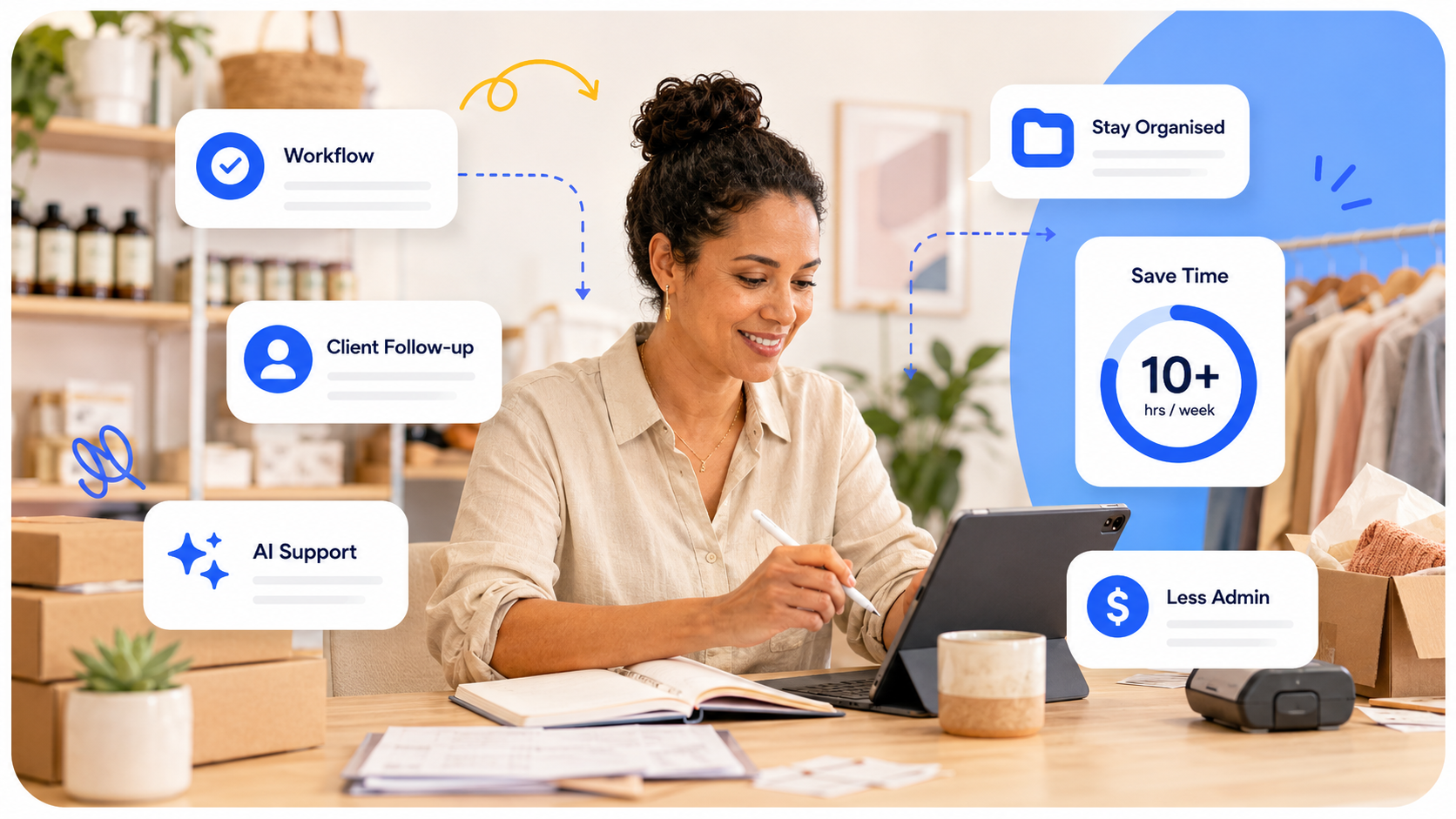
The hours reclaimed by the right software are not just efficiency gains — they are competitive advantage in the making. At Cllimber, we measure that advantage through the Cllimber Opportunity Index 2026, which scores the competitive gap created when businesses adopt specific tool categories effectively over direct competitors that don't.
Sales automation — the AI-powered pipeline and follow-up category — creates the largest competitive advantage of any tool we measure, scoring up to 52.9 across 63 industries, and the gap compounds the longer it holds. The 25 tools below are the implementation layer: what that adoption actually looks like for real small businesses managing live operations.
We asked 25 experts a simple question: which software or AI tool made the biggest difference to your business, and what result did it deliver? Their answers — spanning workflow automation, CRM and pipeline systems, bookkeeping, and AI assistants — are below, each with the measurable outcome it produced.
Zapier Matches Turbocharge Volume and Accuracy
Most founders would say their CRM changed everything. What actually moved the needle at Fulfill.com was Zapier paired with a custom-built matching algorithm.
At launch, every brand request was reviewed personally and 3PL recommendations emailed by hand — 45 minutes per request, around 15 requests a day, roughly 11 hours just on matchmaking. A scoring system weighting 47 variables (order volume, product dimensions, specialty needs like cold storage or hazmat) was connected through Zapier to the intake forms, 3PL database, and email system. Now a brand fills out the form, the algorithm scores compatibility with 800 verified providers, and auto-generates the top five matches in under three seconds.
The result: from 15 brand requests a day to 200-plus without adding headcount, response time from hours to instant, and match quality actually improved. The tool cost about $8,000 to build and $600 monthly in Zapier fees, and connected over 2,000 brands to 3PLs in a year.
The lesson: don't automate for automation's sake. Automate the thing you do 50 times a day with clear inputs and outputs. Find your repetitive bottleneck and kill it with software before you hire your way out of it.
 JS
JS
Ambient Notes Trims After-Hours Work
The one tool that made the biggest difference was an ambient documentation tool for clinical notes. It listens during a visit, with the patient's consent, and drafts the note so the clinician reviews and signs rather than typing from scratch.
The result that mattered was after hours. Before, finishing charts took close to 90 minutes most evenings — the unpaid tail end of the day. With the drafting tool doing the first pass, that dropped to roughly 20 minutes of review and correction. Across a team of clinicians, that is the difference between leaving work at work and carrying it home every night, and it has done more for retention and morale than any perk.
The discipline that makes it safe is that it never bypasses clinician review and runs on HIPAA-compliant infrastructure. Fix the after-hours burden first — that is where good clinicians quietly decide to leave — and insist whatever you adopt keeps a human in the loop and your data inside the fence.
 AE
AE
Square Rebuild Spurs Retail Revenue Lift
The biggest unlock wasn't a new tool, it was finally configuring the one already in place: Square. It had been running like a glorified cash register for the first year, treating retail as an afterthought to spa booking.
Once the workflow was rebuilt — staff prompts at checkout, retail categories tied to the service a guest just experienced, inventory data feeding back into stock — retail sales jumped 40 percent, and Square ended up writing a case study on the business.
The lesson for any bootstrapped expert: before adding another line item to your software stack, audit what your current stack is doing at 30 percent of its capacity. That's where the margin is hiding. New tools feel like progress; reconfiguring the old one is where the unit economics actually move.
 DZ
DZ
n8n Orchestrates Oversight, Reclaims Weekly Bandwidth
n8n changed the shape of the practice. Before it, four separate manual loops ran every week — SERP scraping for ranking drift, brand-mention monitoring across Reddit and forums, AI-citation tracking in ChatGPT and Perplexity, and the weekly audit triage that feeds reporting. Each was a tab-switching exercise that ate a full day.
Wiring n8n into existing SEO APIs, layering Claude calls on top for summarisation and anomaly flagging, collapsed all four into one nightly loop landing in a single Monday-morning digest. Roughly 8-10 hours a week back — and more importantly, it made the weekly audit non-negotiable. The system runs it whether or not anyone remembers to. That's what allows running two businesses in parallel without hiring.
 RS
RS
HubSpot Spine Removes Bottlenecks, Preserves Margins
HubSpot, used less as a CRM and more as the operating spine of the firm. At around 15 people, intake, proposal handoff, audit scheduling, and renewal tracking all lived in spreadsheets and one person's head — the Founder/CEO who was still head of sales. Deals stalled because context couldn't move to the audit team fast enough.
What changed it: a standardised intake form with required scoping fields, pipeline stages tied to audit scheduling, and automated renewal flags on a retainer book where multi-year tenure is the norm. A project manager and a junior AE could then run cycles previously run personally.
The firm grew past 30 without adding the two ops coordinators and the sales ops hire already budgeted. They didn't hire their way out of the bottleneck, they tooled their way out — and that's the only reason margins held while scaling against bigger consultancies.
 DL
DL
ClickUp Integrates Processes, Cuts Admin Load
About 80% of the admin time around client work got cut once ClickUp became the system for briefs, task handoffs, approvals, and recurring processes. Before that, work lived across email, docs, and chat, which meant missed steps and too much back-and-forth. With templates, automations, and a proper client-facing workflow in one place, weekly operations went from roughly 6 to 7 hours of chasing to about 2.
The biggest gain wasn't just time — it reduced errors. A recurring SEO and content workflow for a multi-location client dropped from about 14 manual touchpoints per job to 5, and turnaround went from around 5 days to 2. That meant more billable work could fit into the same week without adding staff.
The bigger operational change came from getting process visibility right first. ClickUp did that better than a stack of separate tools because the tasks, owners, due dates, approvals, and SOPs sat in the same place.
 JR
JR
Applied Epic Standardizes Data, Strengthens Service
The biggest impact has come from Applied Epic. The quality of the data received to work with improved directly when the insurance agencies served began standardising on it.
Previously, data had to be pieced together from various systems — payment records from one platform, spreadsheets from another, policy data from a third. Reconciling any of it took real time and introduced real risk.
Now, when a client uses Applied Epic, the data arrives consistent and clean, with accounting based on insurance protocols. The audit trail is already in place, month-end closes proceed more quickly, and compliance assessments are simpler. That dependability has directly improved the ability to service each agency on the roster.
 MB
MB
Open Dental Unifies Ops, Enhances Responsiveness
The tool that made the biggest difference wasn't a flashy AI app; it was a disciplined use of Open Dental as the operational source of truth.
Once remote dental VAs could work from the same structured schedule, notes, insurance status, referral details, and follow-up queues, the front desk stopped being the bottleneck. The team could confirm patients, chase missing information, track unscheduled treatment, and follow up on claims without pulling clinical staff away from patients.
The biggest result was responsiveness — fewer loose ends meant steadier schedules, fewer dropped referrals, and less stress on the in-office team. Software only works when the workflow is clear. Start by cleaning up one repeatable process, then delegate it.
 AL
AL
Flick Suite Clarifies Finance Workflows
The biggest change came from fixing something unglamorous: reconciliation and bookkeeping workflows. After working with more than 100 startups, a pattern kept showing up — finance teams of sharp, capable people spending most of their time not on analysis or strategy but on preparation. Matching transactions. Chasing invoice gaps. Updating spreadsheets that would need updating again the following week.
One finance lead put it best: preparing the data took more time than understanding the business. So Flick AI was built — an accounting automation platform around reconciliation, bookkeeping, and invoice processing.
The impact wasn't just speed, it was clarity. Workflows that used to involve three people and two spreadsheets became structured and trackable. Teams that dreaded month-end close stopped dreading it. For businesses scaling fast — juggling multiple bank accounts, payment gateways, settlements, and rising volumes — that shift from operational chaos to operational clarity mattered more than any single feature.
 AJ
AJ
Manus Sidekick Drives Cleaner Client Execution
Manus AI has made the biggest difference because it acts more like an operations assistant than a writing tool. It's used for the prep work that slows client acquisition and delivery: researching prospects, breaking down messy tasks, drafting briefs, spotting patterns, and turning scattered notes into usable handoffs.
The result is not a fake time-saving number, it is cleaner execution: fewer blank-page starts, better-prepared client conversations, and less work getting lost between idea, task, and review. For a lean business, that matters because speed only helps if the work still has context and a human final check.
 CG
CG
Telemedicine Access Slashes No-Shows
The single tool that has moved the needle most is the telemedicine platform. Pairing virtual visits with the practice workflow changed how patients across the Rio Grande Valley actually experience care.
The result that matters: patients who used to no-show because of work conflicts, childcare, or a 40-minute drive now keep their appointments. Between extended evening hours, Saturday mornings, and telemedicine, working families finally have a primary care option that fits real life — and continuity is everything in primary care.
On the operations side, telemedicine cut the friction around quick follow-ups, lab result reviews, and medication check-ins, freeing exam rooms for visits that genuinely need to be in person. The bigger lesson: don't chase the flashiest AI tool, chase the one that removes friction for your specific patient base. Map the one moment where patients or clients drop off, then pick the tool that fixes that exact moment.
 YF
YF
Cloud Lending Platform Enables Rapid Expansion
The practice has been revolutionised by cloud-based lending systems. TheLender.com is a centralised platform for everything from loan origination to document generation and delivery, including underwriting, compliance, and bookkeeping.
Its plug-ins for accounting, document management, document generation, and communications have automated nearly every area of the business. As a result, the firm scaled rapidly — from one office in San Diego to 18 offices worldwide in just over two years — without adding overhead. Processes that used to take hours or days now take minutes, which differentiates the business from competitors.
 CL
CL
Secure Texting Speeds Post-Op Triage
The single tool that has made the biggest difference is a HIPAA-compliant communication platform that streamlines post-surgery follow-up by text. It meets patients where they are, since most prefer texting over phone calls.
The biggest result has been faster triage: after-hours voicemails are transcribed and sent as texts for a quick response. That has improved the speed and clarity of communication when patients have concerns, and made follow-up feel more immediate and accessible.
 LP
LP
Instantly Outreach Sparks Referral Pipelines
One tool that has made a big difference is Instantly AI for cold email outreach, especially for reaching real estate agents, property managers, and other local referral partners. In roofing and exterior remodelling, relationships drive a lot of business, but it's hard to manually stay in front of every realtor, HOA manager, or property manager.
Instantly helps build more organised cold email campaigns, test messaging, and follow up consistently without everything depending on remembering to send one-off emails. The biggest result has been more referral conversations and more opportunities with people who already interact with homeowners.
A second tool worth mentioning is ChatGPT, specifically for helping customers visualise potential exterior projects — taking photos of a home and creating realistic mockups of different siding, roofing, and paint options, which helps homeowners picture the finished product.
QuickBooks Online Delivers Real-Time Clarity
The biggest difference has been the implementation of QuickBooks Online. It's been a game-changer for daily bookkeeping while also letting clients view real-time, up-to-date financial information from anywhere.
The benefit over traditional desktop accounting software was the convenience for clients: no more emailing or faxing spreadsheets — just a link they could use to review their financials. That made bookkeeping less of a burden for the team and helped clients feel more confident and in control of their finances.
 AM
AM
Meeting Assistant Captures Decisions and Next Steps
For us, it was an AI meeting assistant that recorded calls, summarised what was decided, and wrote up next steps — all by itself. It sounds like a tiny point, but the gain was not small.
All client calls used to involve someone going away, writing up minutes, following up on what was agreed, and patching the record together. It used to take longer than the call itself, and was never quite complete. The assistant removed that entirely.
 AG
AG
Sentiment Layer Predicts Risk, Improves Retention
AI-powered workflow automation that integrates project management with real-time client sentiment monitoring has been the most transformative tool — shifting operations from reactive firefighting to predictive account management.
The system does more than manage tasks; it proactively identifies at-risk accounts before they escalate. By surfacing subtle shifts in sentiment and operational bottlenecks often invisible in standard status reports, it allows delivery leads to intervene early. Technology is most effective when it augments human intuition rather than replacing it — freeing the team to focus on the client relationships that define long-term success.
 AA
AA
Asana System Powers Scalable Growth
The single tool that transformed the practice was Asana. Using it to automate and track workflows streamlined operations, reduced errors, and freed staff to focus on growth.
That improvement allowed the firm to handle a 50% increase in clients without compromising quality. Prioritise workflow automation early so you can scale efficiently while maintaining service standards.
 KM
KM
GBP Boost Engine Hastens Local Proof
The tool that's moved the needle most isn't a flashy generative AI suite — it's an automated Google Business Profile boosting engine paired with credit-based local keyword rank tracking.
Before leaning into automation, optimising a GBP meant manual audits, guesswork on proximity signals, and waiting weeks to see movement. Now a business is plugged in, a radius targeted around their storefront, and clients typically see initial ranking improvements inside a 48- to 72-hour window. That speed changes onboarding, expectations, and churn.
The result: faster proof-of-value conversations. A prospect can see movement on tracked local keywords before the first invoice. A few honest tradeoffs: automation gets visibility fast, but you still need a clean GBP, accurate citations, and real review velocity to hold the gains. Tools don't replace fundamentals, they amplify them. The highest-leverage software is the one that shortens the gap between effort and evidence.
 WL
WL
EHR Plus Messaging Restores Patient Focus
The single tool that changed the most is a cloud-based electronic health record (EHR) system paired with secure patient messaging. It sounds simple, but that combination quietly runs the entire clinic.
The result that mattered most: the physician gets to spend more uninterrupted time actually listening to patients. In a direct care model, the patient-doctor relationship is the product. The EHR pulls a patient's full history — blood pressure trends, cholesterol, A1C — in seconds, so the conversation starts with the person, not the chart.
Secure messaging has been the quiet hero — patients can send a question, share a home reading, or follow up without scheduling a full visit, reducing phone tag and keeping care continuous. The advice: don't chase the flashiest AI feature; pick the one piece of software that protects the relationship between your clinician and your patient.
 BF
BF
JAX Personalizes Bookkeeping Under Human Review
It depends which team member uses it. Admin and junior members use Xero's built-in AI, JAX. It took time to train so it handles bookkeeping the right way, but it now does so well — though you always double-check.
Managers tend to use Claude, especially for day-to-day tasks (sharing only aliases, not real client names, for security): interest-rate calculations that used to take hours now take minutes; balance-sheet reconciliation and tracing mismatches; spotting discrepancies in large datasets; summarising and making sense of numbers; technical research on tax legislation and accounting standards; and reviewing contracts to pull out key terms.
It's crept into almost everything — but where accountants will always be needed is the judgement side: reading a situation, knowing what a client actually needs, and making a call when the numbers don't give a clear answer. That bit is still very much human.
 EW
EW
Claude Co-Work Becomes an Essential Teammate
Claude Co-Work, by far — especially the phone-sync (Dispatch) option. It's hard to describe how much it's changed things. It even showed how much was being delivered by hand. Now there's help.
Does it need guidance at times? Yes. But it's truly the co-worker that was always needed — and a sign it might be time to increase prices, given how much it revealed about the value being delivered manually.
 KH
KH
Consolidated Summaries Combine Supply Updates
The AI tool that made the biggest difference wasn't a content generator. It was an AI workflow that summarises supplier communications, production updates, and client requests into one operational view.
In a sourcing business, information gets scattered everywhere. Consolidating it saved hours every week and helped the team respond faster without missing important details.
 AS
AS
Automated Dispensing Reduces Errors, Elevates Adherence
The single biggest difference-maker has been an automated dispensing platform paired with the analytics layer on top of it. Point-of-care dispensing only works if the right medication, in the right dose, gets to the right patient at the exact moment the physician hands it over — and automation makes that promise real across 3,600+ provider dispensing sites.
The result that matters most is twofold: a dramatic reduction in human error and a measurable lift in medication adherence. When a patient leaves with the prescription already in hand, they don't make a second trip, weigh the copay, or forget the script on the counter.
The same stack feeds communication with clinicians — showing how dispensing patterns compare to peers and where adherence is slipping, turning a sales conversation into a clinical one. Pick the platform that reduces a real, repeatable source of error in your core workflow, not the one with the flashiest dashboard.
 YF
YF
Notion OS Centralizes Knowledge, Shortens Ramp Period
The single tool that produced the biggest difference for practice operations is Notion, operated as the central operating system for customer communication standards, internal process documentation, and decision logs.
Most practices accumulate operational knowledge in scattered places — email threads, individual notes, Slack messages, undocumented memory — so new team members can't get oriented quickly and existing ones re-litigate decisions already made. Notion as a central operating system produces a single searchable location with structure the scattered alternative can't match.
The result: onboarding time dropped from roughly 6 weeks to productive contribution down to roughly 3, repeated debates over settled questions roughly halved, and decisions sped up because historical context was findable. The key design choice was investing 4 to 6 weeks up front building the structure and the discipline of writing to it. The discipline matters more than any tool — the tool that produces compounding difference is a central operating system the team uses consistently.
 DM
DM
What the data shows: the right tool category depends on your industry
Sales automation creates the largest competitive gap of any category, scoring up to 52.9 across 63 industries. The time these tools free up compounds directly into pipeline velocity and revenue.
The right priority depends on your industry. For professional services, CRM and lead generation rank highest after sales; for trades businesses, local SEO and lead capture create more advantage than CRM. Automating the wrong category, however efficiently, creates less advantage than the right category done imperfectly.
Find your industry's highest-opportunity tool category before deciding which workflows to build.
Frequently asked questions about software and AI tools for small businesses.
What are the best software and AI tools for small businesses in 2026?
There is no single best tool — the right one depends on your bottleneck. Across the 25 experts here, the tools that made the biggest difference cluster into workflow and operations systems (Asana, ClickUp, HubSpot, Notion), bookkeeping and reconciliation automation (QuickBooks Online, Xero's JAX, Flick AI), and AI assistants for drafting and analysis (Claude, AI meeting assistants). The common thread is automating high-frequency, low-judgement work so the team focuses on growth and relationships.
Which tool category creates the most competitive advantage for a small business?
According to the Cllimber Opportunity Index 2026, sales automation creates the highest competitive advantage of any tool category across all 63 industries. The next-best category depends on your sector: professional services gain most from CRM and lead generation, while trades businesses gain more from local SEO and lead capture.
Do small businesses need a CRM?
Most growing small businesses benefit from a CRM or an operations system used as one. Experts here describe using tools like HubSpot as the 'operating spine' for intake, handoffs, scheduling, and renewals — letting a small team run cycles that previously depended on one person, and protecting margins while scaling.
How much time can AI and software save a small business?
Documented savings here range widely: around 80% of client-admin time cut with a workflow system, email triage reclaiming an hour a day, and reconciliation automation making month-end faster and less error-prone. The pattern: narrow, workflow-specific applications deliver more measurable savings than broad platform deployments.
What is the Cllimber Opportunity Index?
The Cllimber Opportunity Index 2026 is a proprietary annual dataset scoring the competitive advantage available to businesses in 63 industries from implementing specific tool categories effectively over direct competitors that don't. It covers 378 scored combinations across CRM, marketing, lead generation, SEO, social media, and sales automation, helping firms identify which category creates the most advantage for their industry before choosing individual products.
JA